Activewear is about to get its most interesting season in years. For AW27, mills are spinning wool from oyster shells, printing spacecraft-grade aerogel into fabric half a millimeter thick, and running biodegradable fibers that outperform the polyester they replace. This is the fabric technology that will separate next year’s standout ranges from the rest.
What makes this generation different is where the performance lives: engineered into the fiber itself, not sprayed on as a finish. It cannot wash out, because it was never a coating in the first place.
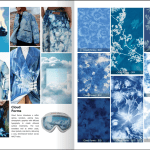
These finds come from our new AW27 Active Fabric Trend Direction — the guide our team builds every season from mill visits, innovation showcases, and the sourcing we run for almost 200 brands. Out of its ten fabric themes, we picked five powerful innovations you can use to build your next collection.
Why Performance Moved Into the Fiber
Two things happened. Regulators banned the forever chemicals behind the most reliable water repellents, and the replacements wear off fast. Meanwhile shoppers stopped believing claims. A wicking finish that fails in the wash becomes a returns problem, and a credibility problem for the brand behind it.
So mills stopped treating fabric and started rebuilding it. Antibacterial performance now goes into the polymer itself, and rain protection comes from changing the shape of the weave rather than gluing a membrane on top. Everything below works that way.
Five Innovations Defining AW27 for Activewear
- FURIX PEF, a biodegradable fabric that gives up nothing. Biodegradable fabric usually comes with a performance trade-off; FURIX PEF avoids it entirely. It is 100 percent bio-based, and its fiber structure is naturally antibacterial. No chemicals added, and it still holds a top antibacterial rating after 150 washes. It wicks fast, shrugs off UV and wrinkles, dries quicker than polyester, and takes dye so well it cuts energy use in the dyehouse. Mills are already blending it with lyocell for drape and with merino for warmth. If your brand wants off petroleum without losing performance, start here.
- Seawool, wool made from oyster shells. Taiwan’s oyster farms throw off around 200 million kilograms of shells a year, and until recently they were waste. Seawool grinds them down, blends the mineral with recycled polyester, and spins a yarn that feels 99 percent like wool. It is anti-static, odor-killing, quick-drying, temperature-regulating, and UV-protective. The yarn took ten years of development to get right, and it is already running in commercial blends with recycled polyester and Tencel that you can sample now.
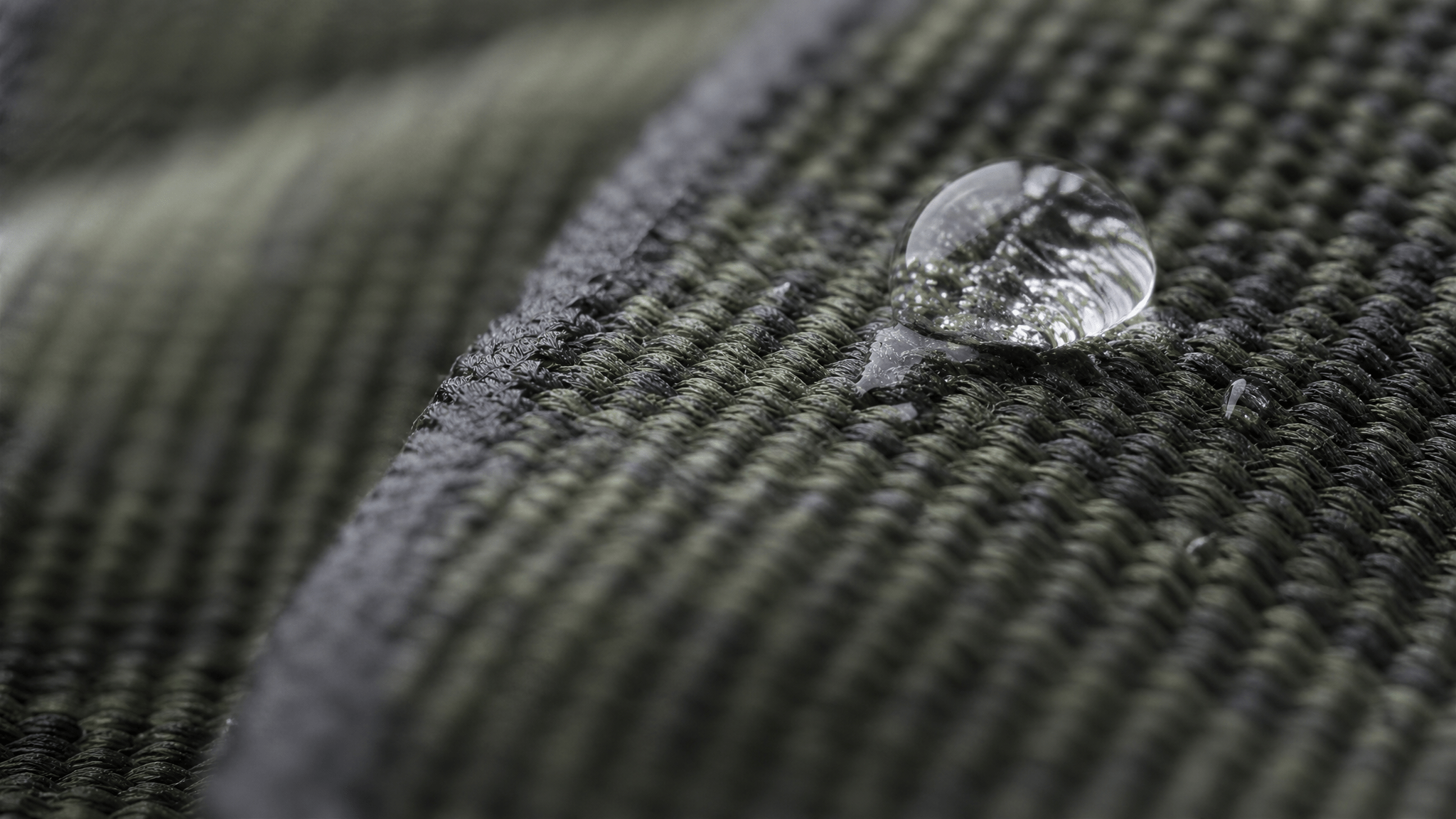
- MINOTECH, rain protection with no membrane. Waterproof normally means laminated, and laminated means sweaty. MINOTECH went another way. The fabric surface is built from tiny convex ridges, a design borrowed from traditional Japanese straw raincoats, so water simply slides off. No laminate means sweat gets out. It is the right answer for the commuter jacket that does not need a full storm shell.
- IN DRY, cooling that keeps going. Most cooling fabric feels cold for ten seconds and quits. IN DRY pulls sweat one way only, from skin to surface, then uses evaporation to keep drawing heat off the body. The harder the wearer works, the harder it cools. That is the whole point of a cooling fabric, and surprisingly few deliver it.
- 3D injection warmth, insulation from the space program. Aerogel is what keeps astronauts warm. Now it is being 3D printed into a fabric layer half a millimeter thick. The numbers: 55 percent thermal insulation at 350 grams per square meter, while wool needs 500 grams to hit 35. Windproof, machine washable, stretches four ways, holds its shape. Warmth without bulk has been activewear’s hardest insulation problem for a decade. On these numbers, this is the closest anyone has come.
The full AW27 Active Fabric Trend Direction covers everything from texture knits and stretch wovens to luxury outdoor and cut-sewn sweater builds, with the material codes, weights, and widths to sample straight away. Click here to download the Trend Book.
Before You Build a Range on These
New fibers come with fine print. Higher minimums, longer lead times, slower lab dips. Our advice is simple: test early, and test in blends. A 30 percent FURIX PEF blend gets you most of the story at a fraction of the risk while supply scales up.
And this space moves fast. Our team at Lever Style tracks mill innovation across Asia every season, which is how this book exists. If one of these fabrics belongs in your next range, we will pull samples, check current minimums, and cost it against your target.
Tell us where your next activewear collection is headed, and we will bring the fabric technology to get it there. Talk to our team.