Your leadership team wants a month out of the development calendar, and someone has written “use AI” next to the target. The tools are on every conference agenda. What nobody has said is where, in a calendar built around sample rounds, fit sessions and approvals, that month is going to come from.
We have been answering that question inside our own business. Most talk about AI in the fashion industry focuses on the customer end: The State of Fashion 2026 from McKinsey and The Business of Fashion reports that more than 35 percent of executives already use generative AI for tasks such as customer service, image creation and copywriting. Our focus is the work behind your product, where time is lost to physical samples, to comments passed between teams, and to the same data being typed again at every handover.
Here is how we use AI and digital tools in development today, what they cannot do yet, and what that means for your next season. A clear brief makes all of it work better, so our tech pack checklist is a good place to start.
Where AI in the fashion industry saves development time
A physical sample round follows the same chain every time: pattern, cutting, sewing, shipping, a fit session, written comments, a revised pattern. Each step waits for the one before. Removing a round, or making each round settle more questions, shortens your calendar in a way that faster emails never will. So we start there, and with the routine work that slows every round down.
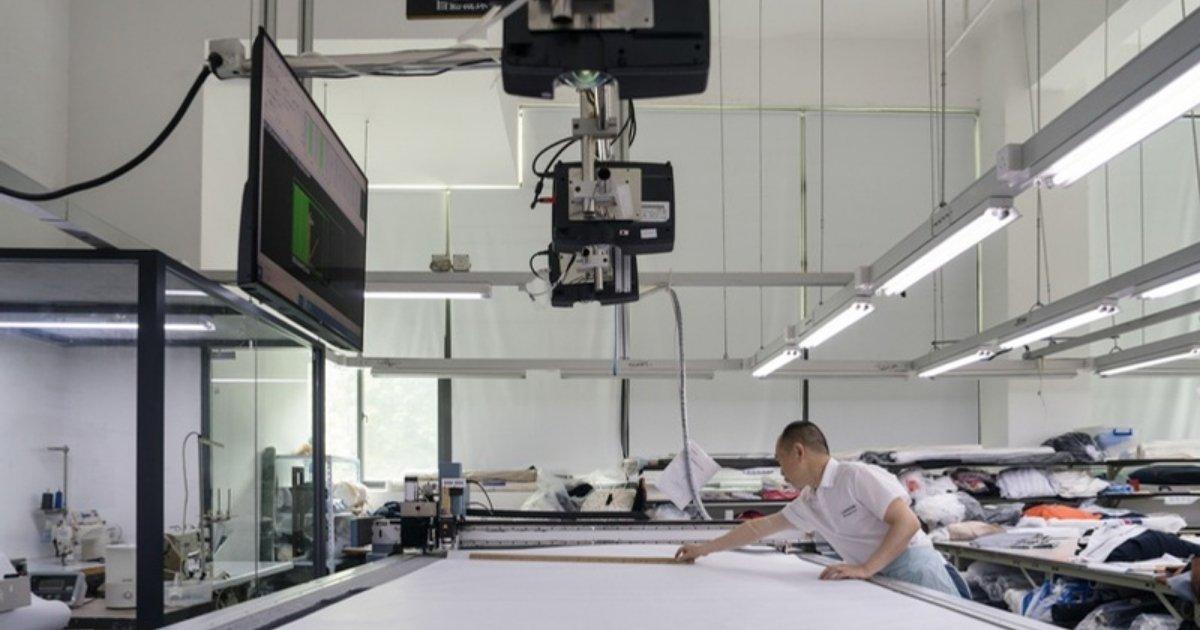
- 3D design and sampling. We use Style3D across all our categories. A style is built digitally from its pattern and fabric data, so you can review proportion, balance, colourway and print placement on screen before anything is cut. The early rounds that exist only to check a silhouette or a placement are the easiest to remove.
- One record for every style. We developed and deployed our own product lifecycle management system, designed to keep workflows transparent, speed up time to market and reduce waste across our supply chain. Each style’s brief, materials, measurements, comments and approvals live in one record, so nobody on the programme works from an old version.
- AI built for our workflow. Instead of relying on generic off-the-shelf software, we have customised our own AI tools to support our merchandisers and our coordination with factories. AI now reads purchase orders and translates tech packs, and factory invoices are handled automatically. On some routine tasks, that has cut our processing time by up to 90 percent.
For you, the effect is practical. Tech packs reach factory teams faster, already translated. Merchandisers spend their time on your product rather than on paperwork. Physical samples can arrive with more questions already settled.
What 3D and AI cannot replace yet
We are careful about where the tools stop. An AI-generated image of a garment is not a garment: it has no pattern, no seam construction, no fabric weight and no trim specification. A concept that looks finished on screen can still need weeks of technical design before it can be quoted.
A 3D sample drapes the way its fabric data tells it to. If that data is wrong, the sample will look convincing and behave differently in real life. Hand feel, stretch recovery, the way a wash changes a surface and colour under real light still need physical confirmation in most categories. Fit on a moving body still needs a fit model and an experienced technician.
The real bottleneck: data between you and your supplier
The biggest obstacle is rarely the software. It is the handover. Your fit blocks, measurement standards and colour references sit in one system; a supplier’s patterns, fabric data and test results sit in another. When the two meet through spreadsheets and email threads, information is retyped, versions drift, and the time a 3D sample saved is spent reconciling comments.
It is one reason we built our own PLM and customised our own AI tools rather than relying on generic software. Whoever you develop with, agree four things before the season starts:
- Which sample rounds can be virtual, and which must stay physical for this category.
- Which fabric data the 3D files rely on, and who measures and maintains it.
- Where the single current version of each style lives.
- How comments are recorded so they reach the pattern maker unchanged.
What this means for your next season
If you need to save time, do not ask a supplier for AI in general. Ask which specific rounds it can remove for your categories, what data that depends on, and how your comments will be recorded. Then measure the calendar against last season’s.
Digital capability now belongs in your supplier review next to cost and capacity, the shift we described in how apparel manufacturing is evolving beyond cost and capacity. Our own progress is set out in our Interim Report 2026.
Contact us to plan your next development calendar with 3D sampling and fewer physical rounds.