Your team has decided to add golf to next year’s range. The first sketches come easily: a polo, a mid-layer, a tailored trouser. Then the swatches arrive, and every card promises the same list of wicking, anti-bacterial, anti-UV and odour control. The real design question is still open. Which golf fabric innovation is worth building a collection around, and which is only a line on a hangtag?
That question matters more as the category grows and competition moves upmarket. Fortune Business Insights projects the golf apparel market to rise from USD 9.89 billion in 2026 to USD 14.83 billion by 2034, with the premium tier growing faster than the market as a whole. In a premium range, material is often where the design idea begins.
We work with brands at that starting point. This article sets out the material directions our team is tracking for golf, how they shape a collection, and how we help you turn them into product. For the wider category picture, see what golfwear demands of apparel sourcing.
Three golf fabric directions worth designing around
Our latest golf market intelligence groups the most useful material developments into three themes. Each one gives a design team something different to work with.
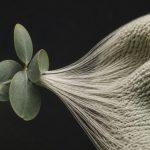
- Sustainable innovation. Lower-impact content can now sit inside a performance fabric rather than beside it. Our selection includes 90 percent recycled polyester with 10 percent elastane at 170gsm for polos, and a 58 percent polyester, 42 percent Sorona knit at 150gsm. Textile World reports that Sorona contains about 37 percent renewable, plant-based ingredients, and describes its soft drape and durable stretch and recovery.
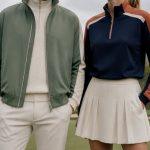
- All day active. Golf clothing now has to move from a morning tee time to the rest of the day. That brief favours quieter technical details, such as a silent coating on a 185gsm recycled polyester mid-layer, or a Solotex woven at 182gsm with anti-wrinkle and C0 water-repellent finishes. The technology is there, but the garment does not have to look technical.
- Natural fibre. Merino, cotton and cellulosic blends bring softness and a more considered handle, with performance built in through their blend partners. Examples include 61 percent merino, 35 percent polyester and 4 percent spandex at 220gsm, 98 percent hemp lyocell and 2 percent spandex at 200gsm, and 87 percent organic cotton with 13 percent bio-based spandex at 160gsm.
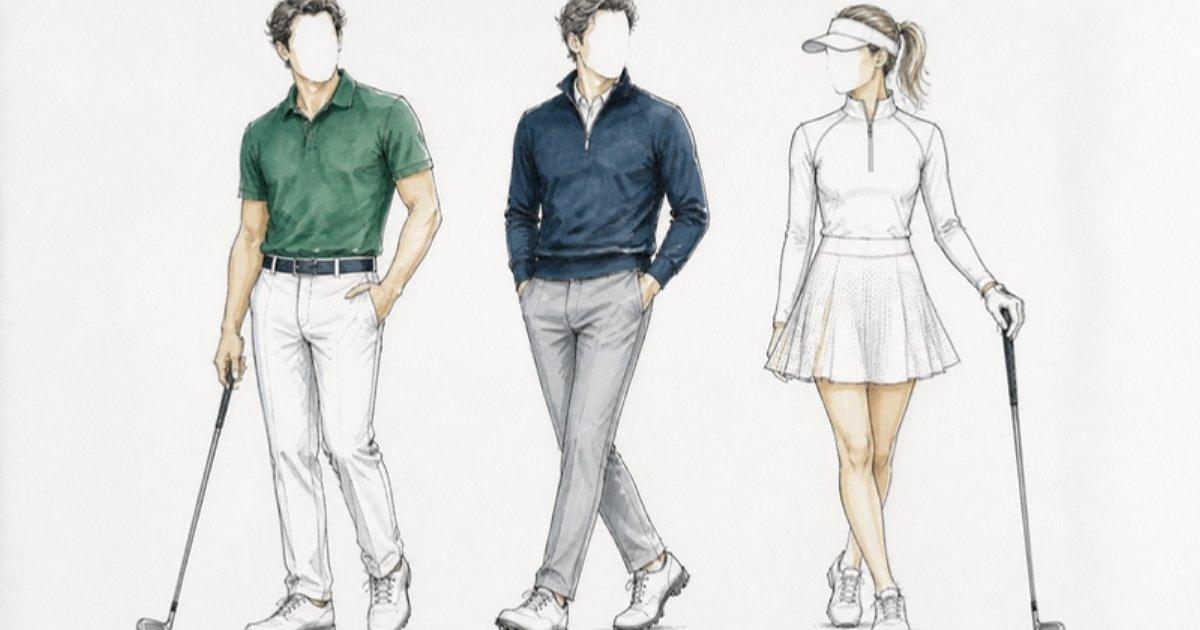
Design the golf collection as a system, not a polo
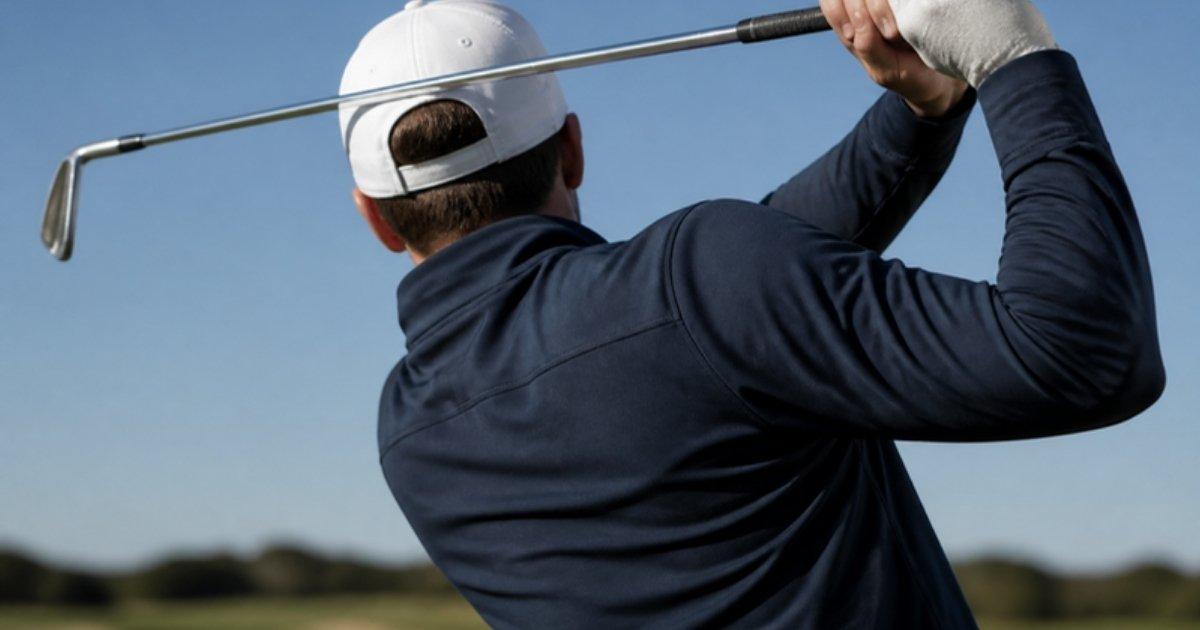
Many golf capsules begin with a hero polo and fill in the rest later. We find it more effective to choose the fabric story first, then decide how it runs through the whole wardrobe, because each garment has a different job.
- Polos and tees carry the feel. They sit against the skin, so hand feel and stretch come first. Our selection runs from 140gsm polyester and elastane to a 215gsm blend of nylon, cotton and elastane, which gives very different characters within one category.
- Mid-layers carry the texture. This is often where a collection becomes distinctive, from a 195gsm stretch knit to a 300gsm modal blend. Weight and surface can do the visual work without adding a logo.
- Bottoms and shells carry the polish. Our market intelligence describes this shift as “from office to golf”. Stretch wovens such as 86 percent nylon and 14 percent elastane at 240gsm keep the clean line of a trouser while allowing a full swing.
Colour then ties the system together. Key accents in our current direction include Meadowland Green, Clay and Ice Blue, alongside Classic Navy. Choose them early, because the same shade can look different on nylon, polyester and a wool blend, and each fibre takes dye differently.
How we help you design a golf collection
You can bring us a finished design, or a season’s direction and a blank page. In either case, our role is to connect the creative idea to what can be developed, tested and produced.
- Set the direction. We start with your customer, price and markets, then share the material directions that fit. Our team tracks mill innovation across the world each season, as it did for our AW27 activewear fabric guide.
- Develop the product. Our in-house designers work on seasonal fabric trends, prints and patterns, and styling designs, and they can support your own design team as much or as little as you need.
- Review it digitally. With our digital fabric library and 3D samples, you can review proportion, colourway and print placement on screen before cutting. We explain the method in where AI and 3D save development time.
- Prove the performance. Physical samples confirm hand feel, fit and movement, and our fabric and garment testing is tailored to each programme and the claims you want to make.
- Produce the range. Because we make polos, activewear, trousers and technical outerwear, the whole collection can move through one coordinated programme, with production options across 8 different countries, using a high-mix low volume approach.
Where fabric innovation gets difficult
New materials carry practical conditions, and it is better to design with them from the start. Innovative fibres can bring higher minimums and longer lead times, so a blend or a small capsule is often the sensible way to test an idea before it anchors a full range.
Mixed fibres also need more development. Two fibres can respond differently to dyeing, finishing and washing, so we judge shrinkage, colour and hand feel on finished fabric rather than on a lab dip alone.
What this means for your next golf collection
Innovation earns its place when your customer can feel it and your team can explain it. Start with one clear material idea, carry it across the wardrobe, and bring your manufacturing partner in while the design can still change. That is when fabric, fit, cost and compliance can be solved together.
Contact us to develop your next golf collection programme with Lever Style.