Every brand wants a sustainability story. The pressure is real: your customers ask, your wholesale accounts ask, and increasingly your investors ask. So the temptation is to find a fabric with the right word attached, organic, recycled, eco, and put it on the label. That instinct is how brands end up exposed.
Because no single fabric is clean, and the founders who get caught out are the ones who treated one green attribute as the whole story. A material earns the word sustainable through several factors: what it is made from, how it is grown, the water and energy it consumes, what happens at end of life, and the conditions it was made under.
That is the part most material guides skip. They sort fibers into natural-good and synthetic-bad, which is useless when you are costing a real production run. The decisions you actually face are tradeoffs. Organic cotton avoids pesticides but carries a water cost. Recycled polyester diverts plastic from landfill but sheds microfibers. Knowing how to read those tradeoffs is what lets you build a sustainability position you can defend, and price correctly.
This guide teaches you how to review a material, with the tradeoffs named plainly and the certifications that actually verify them. The view here comes from the production side, where these materials get sourced and costed, not just described.
How to Judge a Sustainable Material
A sustainable clothing material is one that performs well across five questions, not just one. Before you fall for a single attribute, run any fabric through these:
• Source: is the raw input renewable, recycled, or low-impact to produce?
• Cultivation: how much water, land, and chemistry did it take to grow or make?
• Processing: what happened during dyeing and finishing, which is where much of apparel’s water and chemical damage actually occurs?
• End of life: does the garment biodegrade, recycle, or sit in landfill for decades?
• Labor: were the people in the supply chain paid and treated fairly?
A fiber can ace one question and fail the rest. The job is to understand where each material is strong, where it is weak, and whether its weak points matter for the product you are building
Organic and Recycled Cotton: The Anchor, and the Asterisk
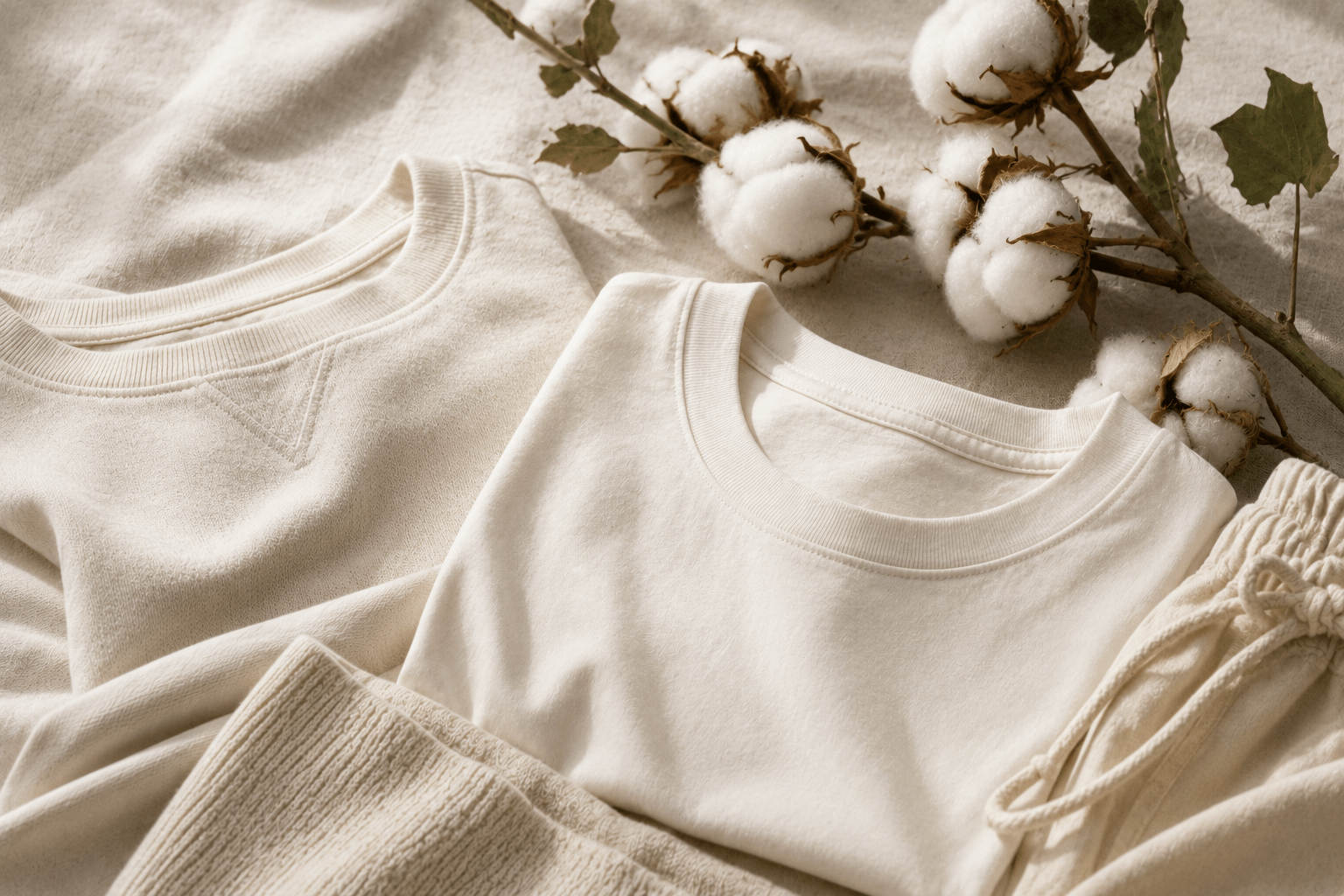
Organic cotton is cotton grown without synthetic pesticides or chemical fertilizers. That single change carries weight. Conventional cotton is one of the most chemically intensive crops in the world, so removing those inputs protects soil, keeps waterways cleaner, and lowers the chemical load on the farmers who grow it.
What organic cotton does not fix is cotton’s water problem. All cotton is thirsty, organic or not, and a field still needs irrigation. It is a better version of a high-impact crop, not a low-impact crop.
The certification that matters here is GOTS, the Global Organic Textile Standard. GOTS verifies organic content and audits the processing, dyeing, wastewater, and labor conditions along the whole chain, which is why it carries more weight than an unverified organic claim on a hangtag. It is one of the standards we source to at Lever Style, alongside the Organic Content Standard, because for a brand making a public claim, a certificate covering the full chain is far easier to defend than a supplier’s word.
Recycled cotton is the other half of this story. Made from production offcuts or worn garments, it keeps usable fiber out of landfill and skips the water and land a fresh crop would need. The tradeoff is strength. Recycling shortens the fibers, so recycled cotton is usually blended with virgin fiber to survive normal wear.
That blend is the honest middle ground, lower impact than all-virgin and more durable than recycled alone. For sourcing, the standard to ask for is the Global Recycled Standard, which verifies recycled content rather than leaving you to trust a percentage on a spec sheet.
Hemp and the Emerging Fibers Worth Watching
Hemp is one of the most efficient fibers in apparel. It grows fast, needs little water and no pesticides, improves the soil it grows in, and produces a strong, durable cloth. For a founder, the historical catch was supply and cost, hemp was niche and hard to source at volume. That is changing. US hemp production reached $445 million in 2024, up 40 percent on the year before, which is the kind of supply signal that turns a niche fiber into a viable one for a growing brand.
Other emerging fibers are worth tracking as the supply chain matures. TENCEL and other lyocell fibers, made from wood pulp in a closed-loop process that recycles its solvents, offer a softer hand with a lower water footprint than cotton. Recycled and plant-based alternatives are arriving quickly. None are a silver bullet, but they widen the palette beyond the cotton-or-polyester default most small brands start with.
Recycled and Biodegradable Synthetics: The Honest Read
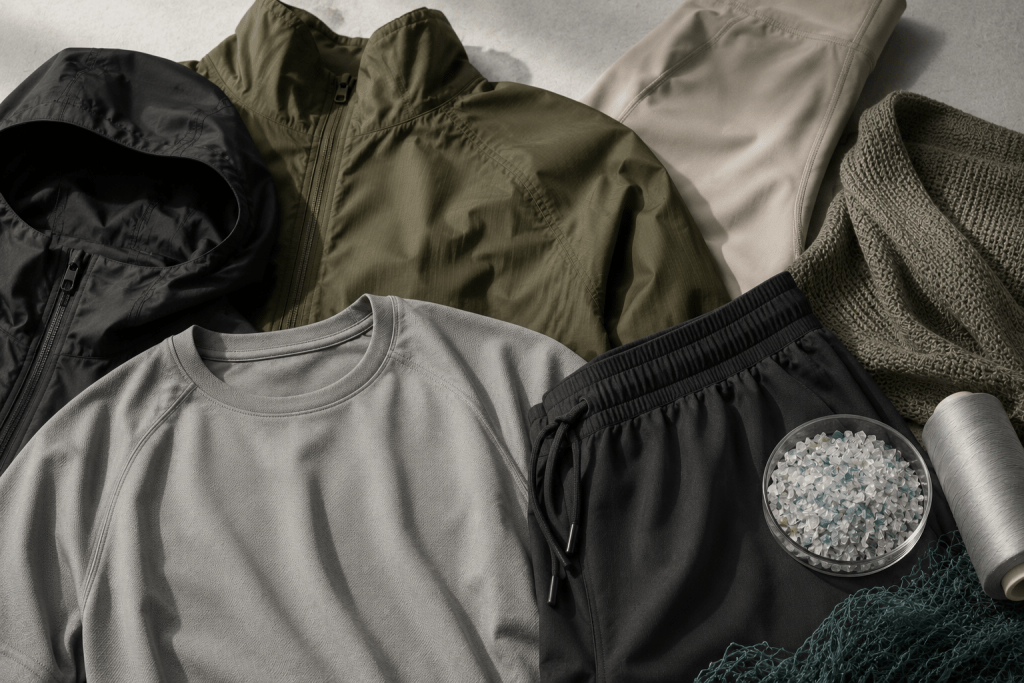
Recycled synthetics, mainly recycled polyester made from post-consumer plastic, are better than virgin synthetics, not good in absolute terms. They divert plastic from landfill and use less energy and oil than virgin polyester, which is a real gain. But they still shed microfibers in the wash, and most are still not biodegradable at end of life. Recycled polyester and rayon are part of the sustainable materials we source, and the standard that verifies the recycled claim is the Global Recycled Standard.
Where synthetics genuinely struggle is the end-of-life question. Biodegradable fabric is the frontier here, and the honest position is that true biodegradability in apparel is still limited and easy to overstate. The more practical near-term win for most brands is on packaging, where degradable plastics and polybags are available now and remove a visible waste problem from the customer’s hands.
The Tradeoff Nobody Mentions: What Happens After the Fiber
The fiber choice gets all the attention, but a large share of apparel’s environmental cost happens after the fiber is chosen, in dyeing and finishing. This is the step most material guides ignore, and it is where a sourcing partner either helps you or quietly undoes your fiber decision.
Conventional dyeing is water-hungry and chemically heavy. The alternatives are real and worth specifying. Natural dyes derived from plants and fruit are non-toxic and compostable. On the processing side, green wash methods and waterless enzyme stone washing cut water use and wastewater discharge against conventional washing. And the baseline to insist on is ZDHC compliance, the Zero Discharge of Hazardous Chemicals framework, which governs what chemistry is allowed near your product in the first place. A beautiful organic-cotton garment finished with bad chemistry is not a sustainable product, and this is the part of the claim most likely to be invisible to you unless you ask.
The Real Lever: Build Things That Last
Here is the point of view the fiber-by-fiber framing tends to bury. The most sustainable garment is the one that does not need replacing. Fiber swaps matter, but durability and longevity move the needle further than almost any single material choice, because a garment worn for five years instead of one cuts its per-wear impact dramatically, and the resale market shows customers increasingly value clothes built to hold up. For a founder, this is also the more defensible story. Quality and longevity are claims you can stand behind without a certificate, and they align sustainability with the thing your business already wants, products people keep.
None of this requires perfection. It requires choosing materials with their tradeoffs understood, verifying the claims you intend to make, and paying as much attention to finishing and durability as to the fiber on the label. That is a sustainability position that survives scrutiny, which is the only kind worth building a brand on.
For context on where these standards sit in practice, Lever Style sources to GOTS, GRS, RDS, OCS and RWS, and operates as a carbon-neutral, B Corp certified supply chain partner, which is the level of verification a brand making public sustainability claims should expect from whoever makes its product.
If you’re developing your next sustainable collection and want a manufacturing partner whose verification holds up to the claims on your label, start a conversation with Lever Style.